
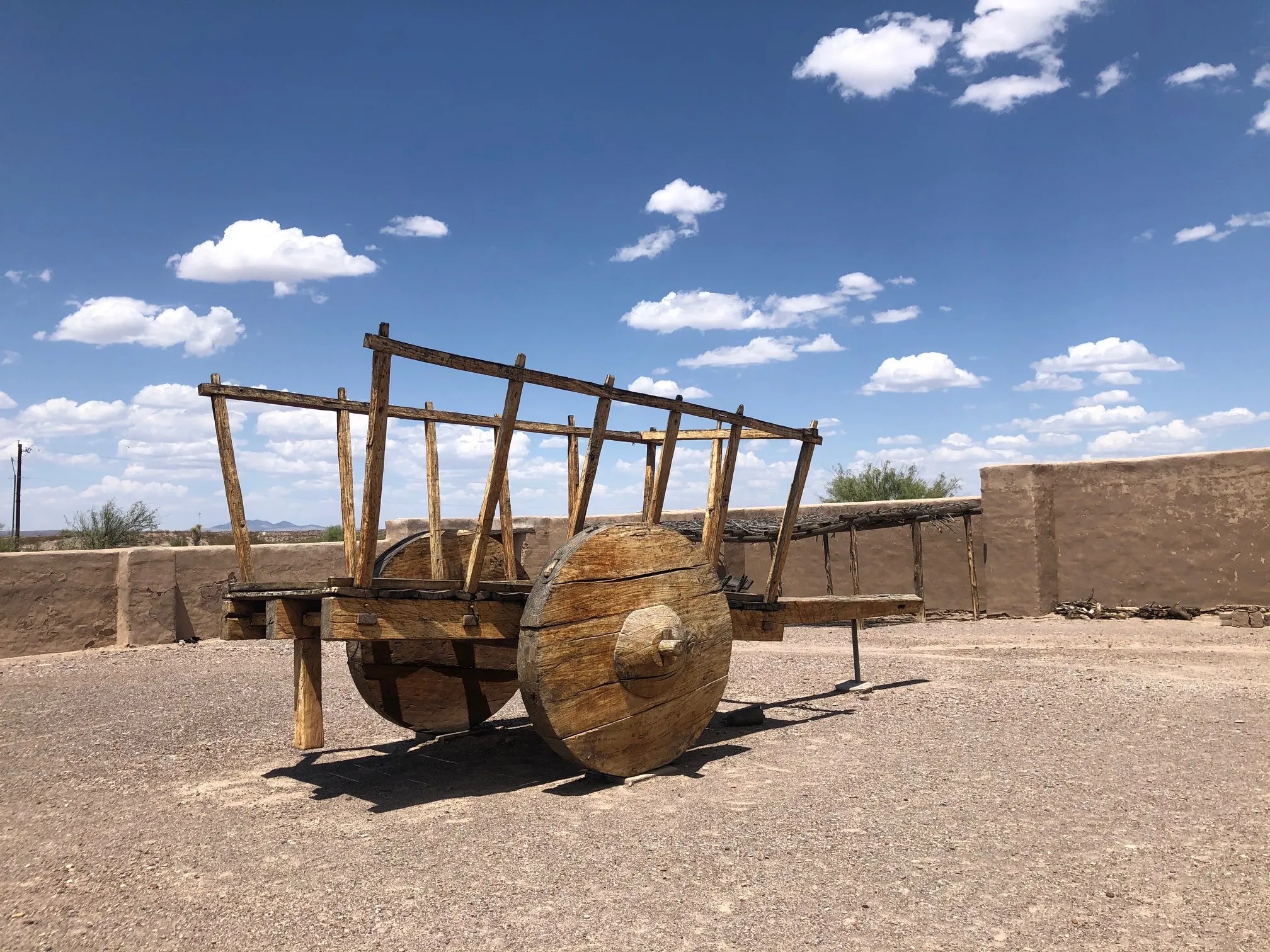
Nestled just four miles east of Presidio on FM 170, Fort Leaton State Historic Site stands as one of the largest and finest historic adobe structures in Texas. This remarkable site offers a glimpse into the turbulent mid-1800s, serving as a fortified trading post on the U.S.-Mexico border, where cultures and histories collided and mingled.
A Glimpse into Fort Leaton’s Origins
The story of Fort Leaton begins in Chihuahua City, Mexico, where Juana Pedrasa met Ben Leaton between 1833 and 1840. By 1848, the couple moved to the La Junta District on the Rio Grande, fortifying existing adobe structures into the square-shaped compound known today as Fort Leaton. It became a vital hub on the Chihuahua Trail—a home, a trading post, and a private fortification against Native American raids and outlaw attacks.
Life at Fort Leaton
Fort Leaton was more than just a building; it was a bustling center of activity. In its early days, the fort was visited by explorers, soldiers, traders, freighters, Native Americans, and Anglo settlers, all seeking protection and trade. Journal entries from visitors like John Coffee Hays and Lt. William H.C. Whiting paint a picture of a crucial outpost offering safety and supplies in an otherwise remote area. Whiting, in particular, described it as “one of the most important places on the Rio Grande,” noting both the strategic importance and the hospitality (if sometimes overpriced) offered by Leaton.
Murder and Mayhem
The history of Fort Leaton also has its darker chapters. Following Ben Leaton’s death in 1851, the fort saw murder, betrayal, and legal battles over its ownership, contributing to its lore and mystique. The narrative of murder and succession paints a vivid picture of life on the frontier, where law and order were often personal rather than institutional.
Preservation and Legacy
Acquired by the Texas Parks and Wildlife Department in 1967, Fort Leaton underwent restoration and was opened to the public in 1978. Today, it operates as a day-use only site, offering picnicking areas, a nature trail, guided tours, and exhibits that span the history from late prehistoric times to the present. The site also hosts special events and serves as a venue for community activities, continuing its legacy as a gathering place.
La Junta de los Rios: The Cultural Crossroads
The broader region of La Junta de los Rios, named for the nearby confluence of the Rio Conchos and Rio Grande, has been a cultural crossroads for centuries. From Native American farmers to Spanish and Mexican settlers, and through the governance shifts from Spain to the Republic of Texas and the United States, this area has retained a unique cultural identity that is palpable to this day.
For those interested in diving deeper into the rich tapestry of this region’s history, recommended readings include “The River Has Never Divided Us” by Jefferson Morgenthaler and “Rio Grande” by Jan Reid.
Visit Fort Leaton State Historic Site
Visitors to the Fort Leaton State Historic Site can explore the layers of history embedded in its walls and surroundings. For more information on visiting, you can contact the site directly at (432) 229-3613 or visit their webpage at www.tpwd.texas.gov/fortleaton. Whether you’re a history enthusiast, a student, or simply looking for a unique day out, Fort Leaton provides a compelling and educational experience that connects the past with the present.
And, if you find yourself in need of legal assistance or historical insight while in Presidio, Marfa, or anywhere in Presidio County, feel free to reach out. My practice and passion for local history are here to serve the community, ensuring that the rich stories of our region continue to be told and preserved.
 Big Bend Law